 Martha’s Vineyard, April 1929
It doesn’t seem possible, but only a month ago I was burying my mother in the small cemetery under the wide Nebraska sky she loved so much. Now I wake up in a mansion on a fog-drenched island that smells of salt, damp, and secrets.
The photo on my nightstand—me, my parents, and my horse Juniper—offers a reminder of the life I cherished and somehow lost. I guess you could say I’m a washashore, as they call them here: someone thrown up on these shores by accident or fate.
My day starts early. Instead of prairie wind, I wake to the sea and Aunt Isabel’s dog, Connor, pawing at the floorboards. I head down to the kitchen, my favorite room in this sprawling, formal house. Bridget, the housekeeper, chatters in her thick Irish accent while pouring coffee and slathering butter on warm bread. Sometimes her brother Patrick appears for a cuppa. For a moment, I almost forget where I am. It seems impossible that my lovely mother could be related to Isabel, Mrs. Hewett, I mean—the reigning ice queen. Even harder to believe that she grew up in this cold, echoing place so far from our cozy cabin in Nebraska. I’ve always wondered what made her leave.
Most mornings I tidy my room and slip out to the garden or to tinker in the garage. It helps me still my mind, and understand where I am. But lately, mornings have turned toward mystery. Aunt Isabel’s friend Ann Simpson has vanished. Some say she drowned. Isabel is certain it’s murder.
“Keep your eyes open and your mouth closed,” she says over tea. “The truth is never simple, but it’s often hiding in plain sight.”
This week, that’s meant funerals, strained small talk with suspicious relatives, and long walks with Ned Cooperson—cousin, local ornithologist, and possible co-conspirator. Yesterday, before dawn, we spotted a shady boat near Starbuck Neck, probably Frank Butler’s. He’s a notorious rumrunner, and his boat, the Nola, is legendary for her speed.
Lunch at Hy House (short for Hydrangea House) is far more formal than anything we ever had back on the farm. First of all, it’s luncheon, not lunch, and it’s served in the dining room; I find neither terribly appealing. But lately, the conversation’s been full of clues tucked between bites of cold ham and pickled beets. (“Maisie Gray wasn’t crying at the funeral—did you notice?”)
Afternoons are for snooping. I’ve peeked into the glovebox of a suspicious Model T, knocked over a pile of telegrams, and maybe read a few letters not addressed to me. I’m not keeping score. (Yes, I am.)
At 4:00, Fiona and I head to Oak Bluffs for donuts from LaBelle’s and a bit of gossip to forget all the adult business that supposedly doesn’t concern us. It’s also where we were accosted—yes, accosted—by two large men with very vague threats. Spoiler alert: things now concern us very much.
Evenings are tense. Isabel retreats to her study. Pat disappears. Bridget mutters about the coming storm. And me? I journal. I draw. I wonder who’s lying—and why.
Sometimes, I imagine I’m back in Nebraska with the flat horizon, Juniper, and no secrets. But then again, that wouldn’t be any fun at all.
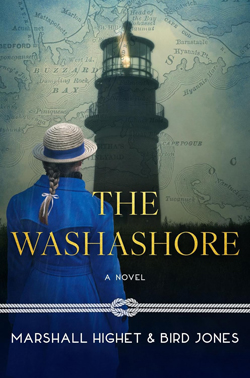
The Washashore
Genre: Historical Mystery
Release: June 2025
Format: Print, Digital
Purchase Link
Martha’s Vineyard, 1929. Prohibition is in full swing, and Emily, a Midwest transplant, has never met her wealthy Aunt Isabel. That is until, after her mother’s death, the courts declare Isabel her guardian. Their first meeting is a disaster. Emily’s clumsy curtsy earns her only a frosty glare, and she quickly realizes she’s in for a crash course in East Coast high society. But manners take a back seat to mystery when Isabel’s dear friend, an accomplished sailor, vanishes at sea. Convinced it’s murder, Isabel recruits her niece to catch the killer, pointing the finger at two dangerous men: a ruthless Mob boss and the fastest rumrunner in the harbor. While Emily crosses paths with gangsters on the island, she may just find home on its miles of coastline and among its quirky inhabitants-her stoic Aunt Isabel included.
Meet the author
In this author duo, Marshall Highet is the fiction-writing half, and Bird Jones is the researcher; together, they craft unusual stories that blend history and fiction. Marshall graduated from the BLSE and works as a copywriter, writer, and professor. Bird Jones is a professor emeritus at Elon University and has spent her professional life as a teacher, researcher, and ethnographer unearthing lost tales.