
 It may seem impossible to believe that a mission of spying would take someone into a porcelain factory, but that is exactly why I am here, the Derby Porcelain Works on Nottingham Road in the Midlands of England, in the winter of 1758. I have my assignment, a secret I protect at all costs, and I must succeed by the spring.
As far as anyone knows, I am only a porcelain painter, hired because my cousin Andrew was one of the founders here at Derby. We Huguenots, French Protestant refugees, are the most prized artisans in England. But it’s more than a family connection. I bring definite skills. While living in Spitalfields with my artist grandfather, Pierre Billiou, I trained with Anna Maria Garthwaite in her studio. I learned to paint flowers on silk dresses commissioned by the wealthiest women in London.
Here, in Derby, I report to work five or six days a week starting at eight in the morning and work for ten hours. Outside the factory buildings are the kilns. When the fires are lit, smoke billows out the top. They roar with such white-orange heat, it can make you perspire from a distance as you walk by, even in the dead of winter. The most beautiful pieces of carved porcelain imaginable are fired in those kilns. The aristocrats go into deep debt to buy porcelain. They call it white gold.
In the other building, they store the clay in the floor in square pits. It smells like rotting vegetables. Hard to believe such exquisite creations are born from that!
In my building all the tasks are divided. There is the throwing room, the dipping room, the figure-making room. I walk up the stairs to my destination: the decorators’ workshop. I have to admit, this is the finest artist studio I’ve ever worked in. There are two smooth-surfaced new tables, smelling of fresh wood, and a large glass window that lets in the light of the countryside. I have all the watercolors paints I could possibly need, thirty-two cakes of color. Yes, this is better than Anna Maria Garthwaite’s cramped studio, where we all battled for space and raced to finish our work before we lost the light. We had little enough light as it was, for London dwelt in a pea soup of smoke and fog.
But while I paint roses and peonies and carnations in Derby in this bright studio, I listen and I watch, for I am here for The Blue. I met a man in London before Christmas, who persuaded me to take this position. I met him in the home of William Hogarth. Sir Gabriel Courtenay was at Hogarth’s side that night: Tall and slim waisted, with pale skin, wide brow, and dark eyes.
Sir Gabriel won’t tell me who he works for, only that Derby has hired a young chemist to secretly develop the most beautiful shade of blue ever seen and I must get the formula. With such an advantage, Derby is sure to surge past all its competitors. But not if Sir Gabriel can get it first.
I am doing this because I don’t want to be a porcelain painter, decorating the objects of the pampered pleasure seekers. I want to be a real artist. I’ve tried and tried to be accepted, and it’s impossible, I’m told. Women have “delicate sensibilities” unfit for art. In England and France I can’t pursue serious study and exhibit my work. But it’s possible in Venice. With Sir Gabriel’s reward, I am bound for Italy.
However, I didn’t expect to like my colleagues in the decorating workshop, or to make a true friend of a woman in whose house I lodge. Guilt stalks my emotions. And there’s more. I am starting to realize that this is more dangerous than simply seeking out a formula.
I’ve been here for weeks and had no success finding the hidden chemist. Which makes me wake up in the middle of the night, my pulses racing. What will happen if I don’t succeed?
Giveaway: Leave a comment below for your chance to win a signed copy of The Blue. U.S. entries only, please. The giveaway ends December 5, 2018. Good luck everyone!
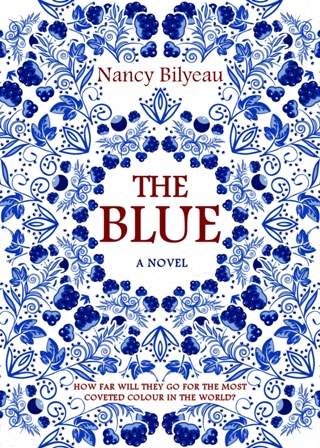
You can read more about Genevieve in The Blue, the latest historical mystery from the author.
In eighteenth century England, porcelain is the most seductive of commodities.
In eighteenth century London, porcelain is the most seductive of commodities; fortunes are made and lost upon it. Kings do battle with knights and knaves for possession of the finest pieces and the secrets of their manufacture.
For Genevieve Planché, an English-born descendant of Huguenot refugees, porcelain holds far less allure; she wants to be an artist, a painter of international repute, but nobody takes the idea of a female artist seriously in London. If only she could reach Venice.
When Genevieve meets the charming Sir Gabriel Courtenay, he offers her an opportunity she can’t refuse; if she learns the secrets of porcelein, he will send her to Venice. But in particular, she must learn the secrets of the colour blue. . .
The ensuing events take Genevieve deep into England’s emerging industrial heartlands, where not only does she learn about porcelain, but also about the art of industrial espionage.
With the heart and spirit of her Huguenot ancestors, Genevieve faces her challenges head on, but how much is she willing to suffer in pursuit and protection of the colour blue?
Publishers Weekly review said: “Intriguing thriller. . . Fascinating details include glimpses of the newly opened British Museum, a Christmas party at the home of William Hogarth, and Madame de Pompadour’s residence at Versailles. Historical fans will be well satisfied.”
Purchase Link
# # # # # # # # # # #
Meet the author
Nancy Bilyeau is a novelist, magazine editor, screenwriter, and blogger. She held staff positions at Rolling Stone, Entertainment Weekly, Good Housekeeping, and InStyle before focusing on fiction. Her trilogy for Touchstone Books–The Crown, The Chalice, and The Tapestry–was set in the Tudor era. The Crown was an Oprah magazine pick, and The Chalice won Best Historical Suspense from Romantic Times Reviews. Her standalone novel, The Blue, was published Dec 3, 2018, by Endeavour Quill in the U.S and the UK, in print and digital.
Nancy’s website is nancybilyeau.com.
All comments are welcomed.
Sounds like this book would be educational as well as entertaining.
What an intriguing book! The cover art is fantastic!
Very different. I love historic mysteries.-
I like that this is a different sort of mystery
Sounds like an interesting read. Thanks for the giveaway.
What a fascinating and unusual setting. It certainly sounds like an interesting and exciting read.
Industrial espionage is a hot topic right now–I’ve never thought about it being something going back to the 1700’s. This sounds very interesting.
This historical mystery sounds fascinating and unique. How intriguing and special. Thanks.
A novel which sounds captivating and enthralling. Historicals are memorable and this story would be extraordinary.
This sounds interesting. I hope I win.
I’m really intrigued by this story. I would love to read it.
The Blue sounds wonderful and very different from what I normally read. I would love to win a copy! I really like the cover, too ~
What an intriguing sounding book. Thanks Dru Ann for including it on
your blog. robeader53(at)yahoo(dot)com
Thank you for the chance to win this book. New to me author and series. I love historical mysteries
Sounds fascinating. But don’t enter me in the drawing, Nancy, I’ll buy it.
I like reading historical mysteries and this sounds like an interesting book.
I like the title
Interesting and different.
This is a new author for me! Thanks for the chance to win this book!
I also write about Huguenots who emigrate to England and look forward to reading your book. Please enter my name in the giveaway.
This book sounds wonderful. I love when I use my fine china as it makes the occasion very special. Porcelain is just so beautiful and I’m looking forward to reading this book because of my fondness of this subject.
Thank you for the information about this story and series.
Cynthia
I have not read a period piece in a long time. This sounds very interesting. I do want to read it.
Sounds like I would enjoy this book….
Thank you for the giveaway…..
**** WINNER ****
The Blue is Carole Penfield
Congratulations!
I’m excited!Look forward to reading the book.