
 In the Logland Mystery Series, other than the first chapter, the books are from the point of view of Police Chief Elizabeth Friedman. Another character is clamoring for more attention – Medical Examiner Isaac Hutton, a.k.a. Skelly. In Final Cycle, a body turned up in the laundromat, and it seemed the friendship between Skelly and Elizabeth might turn into something more. That’s left uncertain.
As I write Final Operation, I continue to show their personal and professional relationship, but only from Elizabeth’s perspective. How would key scenes be different if written from Skelly’s POV?
The scene below is at a city budget hearing in Final Operation. Skelly testifies about the need to continue with a local police department rather than contract law enforcement to the county sheriff. City Clerk Donald Dingle turns the questioning to Skelly’s interaction with the Logland Police Department. (FYI, Tony is a police officer, Marti owner of the Bully Pulpit Diner.)
Marti thought it would be fair to say Mr. Dingle bared his teeth as he looked at Skelly and asked, “And do you find Chief Friedman to be competent?”
Marti turned her head, but Chief Friedman showed no reaction.
“Very,” Skelly said.
“And you would know, wouldn’t you, Dr. Hutton?” Dingle asked.
Even though Marti was behind him, there was no missing that Skelly squared his shoulders and sat up straighter. “Excuse me?”
“You two are in bed together on a lot of levels, aren’t you?”
Skelly stood in a fluid motion and tried to launch himself across the table, on his stomach, arms stretched toward Dingle.
Tony grabbed Skelly’s belt and pulled him back to his chair.
Several people stood. A man called, “Go get ’em, Skelly!”
The mayor pounded her gavel, none too gently. “Please have a seat! Everyone.”
Skelly stayed standing, glaring at Dingle.
“Uh, Dr. Hutton,” the mayor said, “did you want to add anything else?”
Skelly nodded to her. “I believe I’ve contributed what I can.”
He turned away from the council and mayor, walked rapidly down the center aisle, and banged the wooden door as he left the room.
How would the scene progress if the reader were in Skelly’s head? Before this scene, he’s told the City Council that a sheriff deputy could be halfway across the county when a victim is found. The ME can’t examine a body until law enforcement gives the okay.
I watched Dingle gather his thoughts. He didn’t want his planned assault on Elizabeth and her officers to go awry. It wasn’t just a matter of balancing the city budget proposal. He had it out for her.
It didn’t take a mastermind to get that Dingle was embarrassed by the police review of his request that Louella Belle Simpson tell him who went into the laundromat a lot. He hadn’t minded his own business, and it caught up with him. And her.
Dingle leaned forward and almost bared his teeth. “And do you find Chief Friedman to be competent?”
Talk about a ridiculous question. A memory jog reminded me that Elizabeth’s predecessor was Dingle’s buddy.
“Very competent. And maybe more important, she has the respect of the officers who work for her.”
And you would know, wouldn’t you, Dr. Hutton?” Dingle asked.
“What’s your point?” Is he trying to start a scandal about Elizabeth?
“You two are in bed together on a lot of levels, aren’t you?”
My only thought was thrashing Dingle. I slid across the table on my stomach, reaching for him. The old toad can’t even get to his feet.
I felt Tony grab my belt and pull me back to my chair. I vaguely wondered if my belt buckle scratched the table.
Someone, maybe Gene from the tattoo parlor, yelled, “Go get ’em, Skelly!”
The mayor pounded her gavel. “Please have a seat! Everyone.”
I shook off Tony’s grip on my belt and didn’t sit. Later I could thank him for keeping me from garnering an assault charge. Right now, I just wanted to get my heart rate down.
I took in the mayor’s open mouth. “I think I’ve contributed enough to help you avoid losing our local protectors.” I turned and walked down the middle of the long room. I didn’t look at anyone, and tried to quell the urge to slam the hearing room door.
Several things are different when the reader is in Skelly’s head. Some information (such as Dingle’s influence in the laundromat murder) comes from Skelly, rather than from a question directed to the chief later in the hearing.
And we become more aware of how Skelly feels about Elizabeth. When the story is told from her perspective, we see only his actions. They seem to indicate affection in some scenes, but maybe it’s just friendly teasing.
Point of view is a difficult choice. In this scene, the immediacy of Skelly’s thoughts adds a lot. In other scenes, his POV wouldn’t let the reader know enough about tracking the killer. And we might discover less about Elizabeth. That said, I liked being in his head. Maybe other books in the Logland series should include Skelly’s point of view.
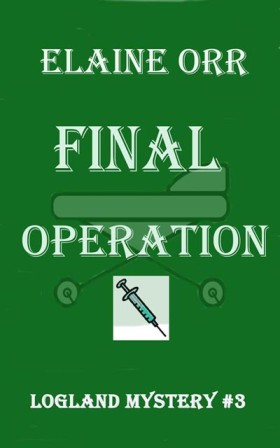
You can read more about Skelly in Final Operation, the third book in the “Logland” mystery series, coming June 7, 2019.
City Clerk Donald Dingle is a pest. He’s a tightwad with the city budget and criticizes the police department to the point that Police Chief Elizabeth Friedman would love to see him retire. And she did mean retire, not expire. When he dies soon after having stents implanted, it’s natural to wonder why he didn’t recover. And then a nurse accuses Medical Examiner Skelly of killing the elderly clerk. Chief Friedman is loathe to believe it. But she has to investigate. She hopes Skelly is innocent. But his innocence creates another problem. The list of suspects is almost as long as the Logland tax roles.
Join the quirky characters of Logland, Illinois in this police procedural with a cozy feel.
Purchase Link
# # # # # # # # # # #
Meet the author
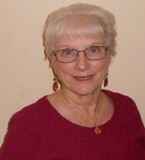 Elaine L. Orr’s twenty-plus books include three mystery series, one of which is the Logland series set in a small Illinois college town. She refers to it as a police procedural with a cozy feel. Learn more at elaineorr.com. She blogs as Irish Roots Author at elaineorr.blogspot.com.
All comments are welcomed.
What an interesting and informative blog today! Thank you Elaine for all the information and gentle teaching! Thanks Dru Ann for today’s blog!