
 I spent most of Covid 19 teaching college students remotely from my basement. Although that may not sound ideal, there was upside. I enjoyed wearing slippers to ‘work’ and my commute had shrunk to less than one minute. Unfortunately, when it came time to emerge from my basement cocoon, I found my social skills had taken a hit. I was rusty and awkward, and I struggled to adapt to conversations less than six feet apart from another human being. Luckily, I wasn’t the only one to feel the brunt of isolation, and that’s where my story starts.
As Covid waned, a woman in my neighborhood randomly sent out a text string seeking walking partners. One rule – there were no rules. She simply sent out texts whenever she felt the urge to stretch her legs which was about four times a week. If you happened to be free, you met at the designated corner and walked with whomever showed up. Some of the women I’d known for twenty years. Others were new to the group. There were friends of friends,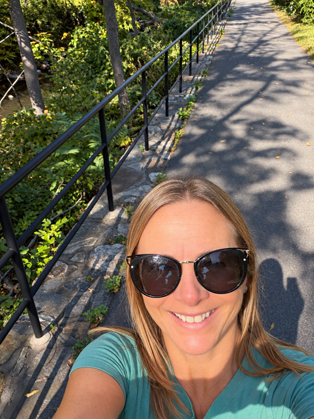 relatives of friends and pretty much anyone with feet and walking shoes. Suddenly, we had a gang, and we were out and about, and oh boy, were we talking. Hours and miles and days of talking and sharing until finally one of the women said, Ladies, you have saved my life. That particular day ended with a group hug.
I shouldn’t have been surprised at the outpouring of emotion because we’d done something that comes naturally to women. We created community. Was it an easy stroll in the park? Absolutely not, because we didn’t always see eye to eye and that became clear early on in our walks. We had raised our children differently, we had unique views on marriage, politics, food, and even underwear, but we listened, and we supported each other.
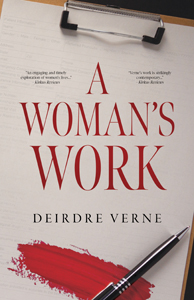
I did my best to capture the idea of community in A WOMAN’S WORK, the story of a nurse midwife accused of providing medical care to a teen girl without parental consent. I picked this topic because I wanted to explore a range of perspectives related to women and their bodies. I also wanted to create a relatable tension that forced my characters to make hard decisions, and not always the right decisions. Most of all, I wanted the women in this book to be able to disagree respectfully. And for my readers, I wanted to write a book with plenty of twists and turns and snappy dialogue. I hope you enjoy!
Here is a snippet from Chapter 1.
Rhonda Kask, here. Nurse midwife, fifteen years and counting. I know a thing or two about women, and my professional wisdom told me that on that day at the Deeva Spa & Café, a young woman was about to have a potentially embarrassing accident. What I didn’t know was that my innocent attempt to intervene in her life would threaten my career, my marriage, and my sense of self. Here’s the thing, even if I knew the consequences, I couldn’t have stopped myself from doing what I do best: Helping women.
This just in: A WOMAN’S WORK placed second in BookFest Book Award Contest for the Women’s category.
A WOMAN’S WORK
Genre: Women’s Fiction, Mystery
Release: August 2026
Format: Print, Digital
Amazon | Barnes & Noble
When Rhonda Kask leaves her city hospital for a midwife position in an upstate town she calls “the new Brooklyn,” Mount Carmel seems like the perfect fresh start—until she’s accused of providing medical care to an underage girl without parental consent.
Can she rely on compassion and courage to heal a divided community—and save herself?
A Woman’s Work is a story of friendship, resilience, and the enduring power of community. At its heart is a woman coming to understand that her past, present, and future are inseparably connected to the rich and varied histories of the women who came before her.
As she confronts the challenges of her own life, she discovers that their struggles, choices, and courage have shaped not only the woman she has become, but the path she must choose for herself.
As Rhonda unravels a mystery buried in her small town’s past, she discovers that the truth has the power to bring its women together—and that sometimes the answers we seek can only be found in the stories of those who came before us.
 About the author
Deirdre Verne is the author of the Sketch in Crime mystery series published by Midnight Ink: Drawing Conclusions (2015), which Kirkus called a “winner,” and Drawing Blood (2016), which Kirkus called “twisty and surprising.” In 2017, Drawing Blood was selected as a top five cozy mystery favorite on the Escape into a Good Book with DollyCas’s annual list. Verne’s short stories appear in three Sisters in Crime Anthologies. In addition to writing, she is also a professor of Marketing at Westchester Community College where she has worked with young adults for twenty-five years.